All in Contemporary Art

Interview with Miyoko Kamimoto

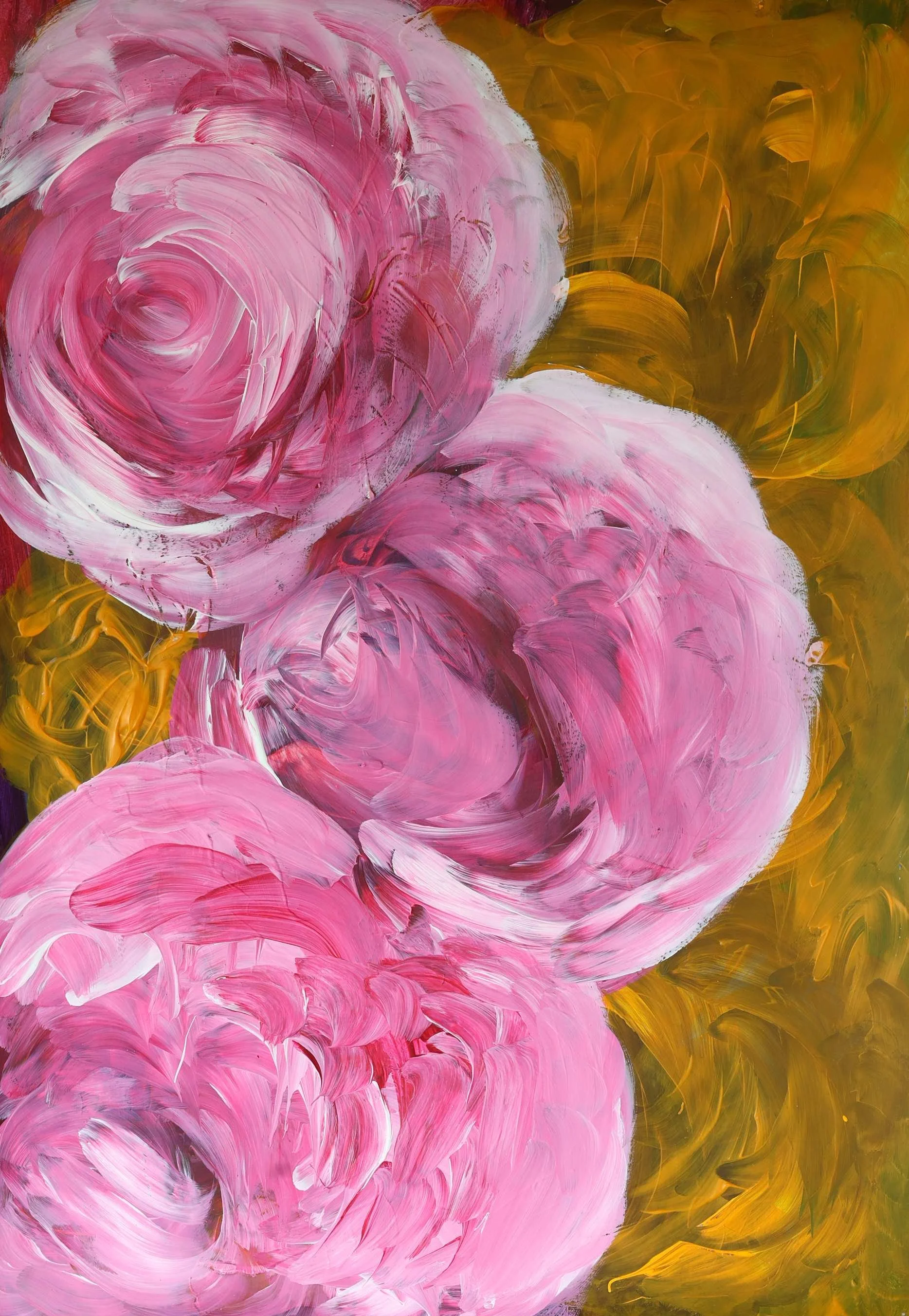
I conceive of roses and cranes as living entities endowed with mind and emotion. This perception arises from an inner, multidimensional worldview that is liberated from physical and temporal constraints, within which such beings reveal themselves in this form. What appears there is not the object itself, but the manifestation of mind and emotion; at times, the universal ideals of truth, goodness, and beauty—which each being may inherently possess—are reflected with clarity and dignity within the rose.

Interview with Christy Chor

Christy Chor is a Canadian ceramic artist who creates a body of narrative-driven sculptural work exploring the sensory dialogue between humanity and the natural world. Her master theme, BACK TO NATURE, unfolds through successive series including Bird, Bear, and her current Mountain works, serving as tactile meditations on wonder, imbalance, and rebirth. An internationally recognized and award-winning artist, Christy's practice merges cross-cultural perspectives, uniting her ceramics education from Sheridan College in Canada with professional experience in Asia's design industry. Through this unique lens, she creates sculptures that are both communicative and masterfully composed.

Interview with Shimohara Aya

I am interested in the tension between escapism and the weight of the real because I don’t think we ever fully move from one to the other. Screens offer us moments of escape, projection, and imagination, but they are also where anxiety, comparison, loneliness, and desire accumulate. What looks like lightness or play often carries a quiet heaviness underneath. In that sense, fantasy and the ordinary are not opposites in my work—they coexist and constantly bleed into each other.

Interview with Carmen De Alba

I am guided almost entirely by intuition, an inner voice that speaks through the process. When something is missing, the painting carries a sense of visual emptiness; it has not yet found its soul. The moment of equilibrium arrives when that inner voice becomes clear. A sense of fullness rather than excess. That is when I know the painting has reached its emotional balance, and that nothing more needs to be added or taken away.

Interview with Michel Testard

Michel Testard is a contemporary painter whose work is shaped by long-term travel and lived experience across Asia, India, Europe and the polar regions. Born in Japan and raised between continents, he has developed a practice rooted in travel, cultural immersion and sustained encounters with distant places. His paintings explore landscapes, interiors and human figures as emotional spaces rather than documentary subjects, blending observation, memory and imagination.

Interview with Veronique Avril

I don’t see anything particularly abstract in my work. I see a mode of expression through colors, texture, and theme. I see a transmission of emotion much more than abstraction.
For me, it’s visual, it’s emotional, but not abstract.
When I choose something that evokes liquid, metallic, or cosmic surfaces, it’s a choice. When I choose a reserved woman or a child with a bear, it’s a choice, but it’s not abstraction.
I want the audience to feel an intense sensation, an intense emotion, something that touches them. It’s not an endpoint; it’s the beginning. It’s a choice to choose colors, forms.
I want both recognizable iconography and visual density.

Interview with Ashley Gray

I feel the emotional charge of a symbol before its exact meaning. Often the symbol arrives unconsciously, and reasoning catches up over time, layering understanding gradually like a processing phase. Because of this process, ambiguity naturally enters the work. At the same time, I also cultivate ambiguity intentionally. The way I frame and position a symbol is as important as the symbol itself. Its placement becomes a device to open multiple interpretations rather than close them down.

Interview with EJ Lee

EJ Lee is an interdisciplinary artist who transforms language into physical form. Her work often begins with autobiographical poems that explore experiences with dyslexia, trauma, and healing, which then shape the materials, colors, and forms of each piece. From sewn works to wearable garments and installations, her practice turns the instability and imperfections of language into a method for creating meaning.

Interview with Gustavs Filipsons

The painting itself is a portal to the realm of beyond. It encourages a different way of perception. Someone has to be a little distracted, a little scared, and confused to start seeing things differently or as they are. First must be reluctance, then awareness of worth looking further, and the perception of vision afterward. The mind should get preparation in order to be focused differently. We live in a world where focus is fixed, as life is. To a much greater extent, this is established by the system and could be shifted. I encourage the spectator to learn to look without prejudice. This is my goal.

Artist Spotlight - Aomi Kikuchi

Aomi Kikuchi is a multidisciplinary artist whose practice develops from textiles to sculpture, installation, and mixed media. Inspired by Buddhist philosophy: impermanence, insubstantiality, and suffering, and the Japanese aesthetics: wabi-sabi (imperfection), mono-no-aware (sensitivity), along with environmental issues, she aims to show viewers the transience of the material world, while also promoting the importance of compassion.

Interview with Louise Manzon

In my work, the space between figuration and abstraction allows me to move away from literal representation and focus on what makes a form feel alive. Rather than describing anatomy, I build forms according to an internal logic — guided by balance, tension, rhythm, and movement. This gives me the freedom to explore presence as something physical and perceptual, not symbolic or narrative.

Interview with Karima Al-shomely

I achieve a balance between documentation and abstraction by approaching visual ethnography as an interpretive process rather than a mere direct of reality. It helps me uncover what already exists as a foundation for the documentation phase, which forms the knowledge base of the work. In this phase, I am committed to prolonged observation, immersion in the cultural context, and the collection of images and visual materials as evidence of lived experience, while respecting the privacy of the place and the people and their symbolic meanings.

Interview with Charlotte Baqai

My creative process is absolutely an excavation of my internal landscape on all layers, mental, emotional, physical and spiritual in that given moment and to use the archaeology reference, some things are easier to excavate than others depending on how many layers it is buried beneath. This is reflected in my work, the deeper the emotion, the memory or experience, the more layers of paint, the more activity and energy is required to achieve the release.

Interview with Iyad Almosawi

Iyad Almosawi is a versatile and talented artist with award-winning works across various genres. He masterfully blends technique and vision in his paintings, sculptures, murals and installations, exploring inner energies and emotions. His murals, which bring color and life to public spaces reflect his love for nature. Through his art, he transforms spaces, making them accessible and inviting for people to admire and engage with.

Interview with Petra Mattes

Most of my chosen canvases and surfaces are conscious decisions. It begins with the size of the canvas and then the structure. This decision is very important. The painting process is a constant making of choices which influence, enormously, the result. Sometimes I struggle with the surface and ask it what it wants. To work against the surface is contradictory. For example, I chose a very plain canvas surface for the painting -love- , as I wanted the black color to drop down on it, to express the fluid existence of love. According to the philosopher Heraclitus, “Everything flows…”

Rose Masterpol

Rose Masterpol is an artist of considerable importance. Her paintings do not imitate the world. They reorganize it. They reveal the underlying patterns that shape experience. They invite the viewer to slow down, to recalibrate attention, and to discover the richness that exists beneath the surface of perception. Her three decades of creative exploration have culminated in a body of work that speaks with remarkable authority and poetic intelligence.

Aleksandra Ciążyńska

Aleksandra Ciążyńska’s paintings, then, are not simply artworks. They are instruments of perception, catalysts for attentiveness, and invitations to dwell more meaningfully in the world. Her talent lies in the rare ability to make viewers feel that the world is worthy of wonder and that they themselves are capable of perceiving that wonder. Her contribution to contemporary art is already significant, and her trajectory promises even greater impact. She is an artist who restores faith in the power of painting and demonstrates, with impressive clarity, that art remains one of society’s most profound tools for illumination and renewal.